
Strain sensing quantifies how much a material deforms under mechanical load, expressed as micro-strain (µε), the ratio of length change to original length. LoRaWAN strain devices read a connected sensing element, commonly a foil strain gauge in a Wheatstone bridge or a vibrating-wire gauge, and translate the resulting signal into a calibrated strain value transmitted as a compact uplink payload.
Because LoRaWAN combines long range with multi-year battery operation, these sensors excel where wiring is impractical: bridges, tunnels, dams, building frames, wind turbines, cranes, pipelines and rail infrastructure. They underpin structural health monitoring, fatigue tracking and overload alerting, often pairing strain with temperature to compensate for thermal expansion.
When comparing devices, weigh these factors:
- Measurement range, resolution and accuracy in µε, plus number of gauge channels and bridge type supported
- Temperature compensation and on-board sensors
- Battery life, reporting interval and threshold-alert support
- Enclosure rating (IP/NEMA) for outdoor or embedded use
- Supported regional frequency plans and a documented payload codec for decoding
Match the sensing element and excitation to your gauge before deploying.
No devices match
Try broadening your search.
 ✓ CERT
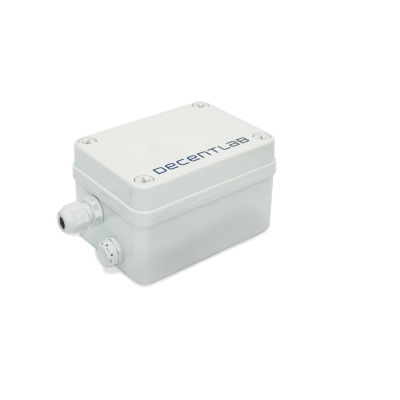
DL-DLR2-012 - Analog Strain Gauge Sensor Transmitter
The Decentlab DL-DLR2-012 is an Analog or Digital Sensor Device for LoRaWAN® that consists of an Analog Strain …
 ✓ CERT
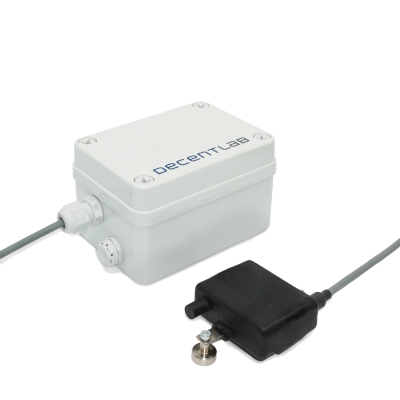
DL-KL66 - Strain / Weight Sensor
The Decentlab DL-KL66 is equipped with a vibrating wire that works as a strain/ weight sensor for measuring …
Top vendors
Manufacturers with the most strain devices in the catalog.
Related
Frequently asked questions
What does a LoRaWAN strain sensor measure?
It measures mechanical strain, the relative deformation of a material under load, typically reported in micro-strain (µε). Most devices use a bonded strain gauge or vibrating-wire element whose electrical response changes as the material stretches or compresses, which the node converts to a strain value.
What is a LoRaWAN strain sensor used for?
Common uses include structural health monitoring of bridges, buildings, tunnels and dams, plus load monitoring on cranes, machinery, pipelines and rail. LoRaWAN suits these jobs because nodes run for years on battery and reach remote or buried locations through walls and long distances.
How often do strain sensors send data?
Reporting is configurable, often from minutes to hours, to balance battery life and data resolution. Many devices also support event-triggered alerts when strain crosses a threshold, and temperature compensation since thermal expansion affects gauge readings.