
LoRaWAN Water Potential Sensors
LoRaWAN water potential sensors report soil matric tension wirelessly, helping growers and researchers track how tightly water is held in the soil.
Water potential measures the energy state of water in soil or a growing medium, expressed as the matric tension a plant root must overcome to extract water. It is typically reported in kilopascals (kPa) or centibars, where more negative readings indicate drier, less plant-available conditions. Because it reflects how hard water is to extract, it complements volumetric moisture rather than duplicating it.
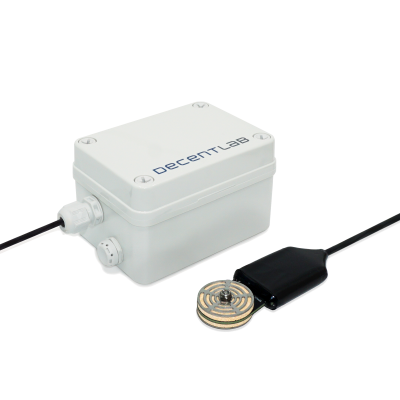
A LoRaWAN water potential device pairs a tensiometer or matric-potential probe with a low-power radio. The node wakes on a schedule, reads tension, and sends a compact payload to a gateway, where a codec decodes the value. Long range and multi-year battery life make this practical across open fields and remote plots.
Typical applications include:
- Precision irrigation scheduling and water-budgeting
- Viticulture, orchards, and row crops
- Greenhouse and substrate-based growing
- Soil hydrology and research
When comparing devices, weigh measurement range and accuracy, probe depth options, battery life, enclosure (IP) rating, supported regional frequency plans, and whether a payload codec is provided.
Devices
Top vendors
Manufacturers with the most water potential devices in the catalog.
Related
Frequently asked questions
What does a LoRaWAN water potential sensor measure?
It measures soil water potential, the matric tension a plant must overcome to draw water from the soil. Readings are usually reported in kilopascals (kPa) or centibars, where more negative values mean drier, harder-to-extract water. Unlike volumetric moisture, water potential reflects plant-available water directly.
How do LoRaWAN water potential sensors send data?
The probe samples tension at set intervals, and the LoRaWAN node encodes the value into a small payload transmitted over a public or private network to a gateway. Because LoRaWAN is low-power and long-range, devices can run for years on battery in remote fields, with readings decoded by a payload formatter.
Where are water potential sensors used?
Common uses include precision irrigation scheduling, viticulture and orchard management, greenhouse and substrate growing, and soil-water research. They help decide exactly when and how much to irrigate, reducing water use while avoiding plant stress.