IMPORTANT BEFORE POSTING:
- Check the Learn section: https://www.thethingsnetwork.org/docs/lorawan/
- Check the Stack documentation: https://www.thethingsindustries.com/docs/
- Make sure you’ve searched the forum: https://www.thethingsnetwork.org/forum/search
- Check the vendor’s documentation
Summary
Tuned antenna performs worse than untuned*.*
Logs
Please paste any error logs here and use the text format (< / >) option (No screenshots!)
Hardware
Older RAK7249, untuned 5.8 860-915 antenna vs McGill 5.8 915 antenna
I have a older RAK 7249 mounted externally 15 m high. I have the RAK 5.8 untuned 860 - 930 rod antenna screwed directly on top of the metal case. As I am in North America I thought I’d try a tuned antenna 5.8 antenna from McGill microwave to improve my reception in a heavily treed environment.
After several days of testing the McGill tuned performs worse than the untuned antenna. I have uploaded all the moment by moment data to several AI models and the answer is that the metal box (ground plane) is messing with the highly sensitive tuned antenna. Their answer is to only mount a tuned rod antenna to a length of LLM400 cable first , never to the box directly.
Any thoughts on the issue of direct mount? I am NOT looking for answers about raising the antenna higher, or doughnut effects. Just the issue of whether direct mounting is a bad idea.
Here is Chat GPT solution " If the antenna is mounted directly to the RAK7249 (or similar RAK outdoor gateway) without a pole, we are looking at a classic case of Near-Field Interference and Chassis Detuning.
When an antenna is screwed directly into the N-type bulkhead of a metal gateway enclosure, the gateway’s own body becomes part of the antenna system. Here is why your “Untuned” antenna is winning and how the “Tuned” one is being sabotaged:
1. The Chassis as a “Ground Plane”
A LoRaWAN antenna is designed to radiate into “free space.” When you mount it directly to the gateway:
-
The Metal Box Effect: The metal enclosure of the RAK gateway acts as a massive, asymmetrical ground plane. This pulls the “resonant frequency” of the antenna.
-
The “Tuned” vs. “Untuned” Performance: Because the McGill antenna is so precisely tuned to 915 MHz, this shift moves its “sweet spot” to perhaps 905 MHz or 925 MHz. It is now “de-tuned” for the actual LoRaWAN frequencies. The “Untuned” antenna has a much broader resonance (lower Q), so when its frequency shifts, it is still “good enough” to cover 915 MHz."
 ) but for sure, have to fit a balance between construction, efficacy and durability, so probably not the absolute best.
 ), aka over simplification, aka misleading aka shorthand for the ISM band of 902–928 MHz.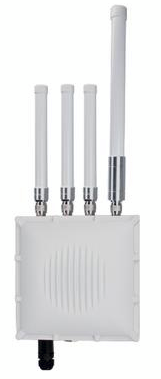


 that sure can be useful