I have not tested this fully yet, but so far the arrangement in the photo below seems to work satisfactorily.
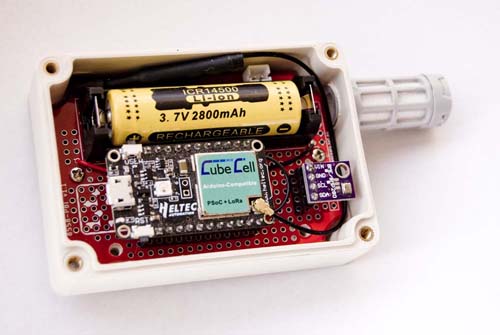
The protrusion on the right of the waterproof case is described as a “waterproof sensor case” (just ‘Google’ it) usually used in making soil moisture measurements. The BME280 sensor that I have sealed inside this arrangement is making identical temperature and pressure readings to another that I have mounted in a similar enclosure with just a plain hole in it. At the moment, the humidity measured in this configuration is about 5% lower than the configuration with an open hole, but I have seen this sort of variation between sensors, so it may not be significant. I have still to swap the actual sensors over and verify whether the difference is the sensor or the enclosure configuration.
FYI, the sensor case has a 12mm screw thread and a nut that is usually used to secure it in place. To save room inside my enclosure, I cut a smaller (10.5mm) hole and tapped a 12mm thread (just using a 12mm bolt) so that the case would screw into the actual enclosure wall. I then cut/filed/sanded the excess ‘thread’ off the sensor case so that it sat flush with the inside of my enclosure.
In theory then, while a somewhat unsophisticated arrangement, this is a ‘waterproof’ enclosure that still allows water molecules (vapour) to pass through the sensor case filter. I’m yet to test this with a VOX sensor, but enough ‘air’ also passes through the case filter to provide consistent pressure readings.